
Vein Disease
The 3 Stages of VEnous Disease
STAGE One
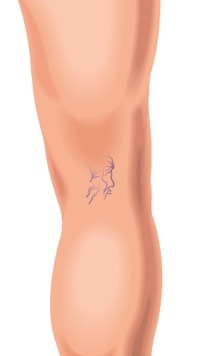
Spider Veins
Cosmetic Issue
Spider Veins is a cosmetic condition that is treated with Sclerotherapy (spider vein injections). Dr. Almeida is involved with the evaluation and treatment is performed by the nurse. An ultrasound is not required. Spider veins will not harm you if left untreated and this is not a medically necessary procedure. Non-surgical.
Beware of Fraud: You do not need an ultrasound to treat spider veins. Seek a vein professional.
STAGE TWO

Varicose Veins
Leaky Veins
Bulging Varicose veins are a medical problem. When veins bulge it means they are under pressure and there is something going on inside of the leg. An ultrasound is necessary and should be done in an accredited lab. Strict protocol must be followed for accurate results during the ultrasoud.
Beware of Fraud: You do not need an ultrasound to treat spider veins. Seek a vein professional.
STAGE tHREE
ADvanced Venous Disease
Swelling, Skin Damage & Ulcers


Caused by deep veins (Deep vein thrombosis – DVT) or blood clots. A fresh blood clot in a deep femoral vein DVT (acute) may break up and cause pulmonary embolism (clot breaking and going into the lungs), which makes this something we must immediately treat and anticoagulats with medicine and we may also go after it with thrombolysis.
After it is there chronically for a long time it becomes a scar blocking the vein causing post thrombotic syndrome, causing skin damange and ulcer. Treated with Balloon angioplasty of obstruction and stenting.
Veins that are diseased with previous blood clots tend to obstruct and scar down blockage. The treatment is to open them with angioplasty or stents.
Beware of Fraud: You do not need an ultrasound to treat spider veins. Seek a vein professional.
Get to know a world leader in vascular disease management, Dr. Jose Almeida.
In 2003, Dr. Almeida introduced the International Vein Congress (IVC) – a global educational forum in venous disease management. He is the author and editor of the “Atlas of Endovascular Venous Surgery” textbook published in 2002.

About Vein Disease
Vein disease affects more than 25 million Americans today. It is caused when the walls of the veins become weak or damaged. In a healthy individual, veins have one-way valves that work within the circulatory system to pump blood back up to the heart.In a normal circulatory system, the blood flows to and from the heart by way of arteries and veins. Arteries take oxygen rich blood away from the heart and veins return blood to the heart.
Vein Disease Chart
Symptoms
- Varicose Veins
- Painful Legs
- Tired or Fatigued legs
- Heaviness
- Swelling
- Edema
- Reddening of Skin
- Leg Ulceration and sores
- Lipodermatosclerosis
- Rash or discoloration of skin
Risk Factors
- Family History of Varicose Veins
- Age & Gender
- Pregnancies
- Obesity
- Standing Professions
- Inactivity
- Deep Venous Thrimbosis (DVT)
Treatments
- Conservative Method
- Ultrasound Guided Sclerotherapy
- Sclerotherapy
- Endovenous Ablation
- Laser Ablation
- Radio Frequency Ablation
- Ambulatory Phlebectomy
How Does Vein Disease Happen?
In a normal circulatory system, the blood flows to and from the heart by way of arteries and veins. Arteries take oxygen rich blood away from the heart and veins return blood to the heart. As muscles contract, the blood is squeezed forward in the veins. When muscles relax, the valves shut to prevent blood from flowing backwards. When an abnormal circulatory problem exists in the body, and the blood from the legs cannot efficiently return to the heart, this in known as chronic venous insufficiency.
More specifically, when the vein walls become weak or diseased, a faulty or weak valve can exist within the vein.
The “leaky valve” prevents blood flow from going upwards and against the pull of gravity. When a valve fails to function correctly and not close correctly, there is a reflux of blood in a negative direction. This leads to a pooling of the blood or backward flow and can cause a variety of vein complications such as chronic vein disease, which includes varicose veins, spider veins, reticular veins, deep vein thrombosis (DVT) or blood clots, superficial phlebitis and chronic venous insufficiency.
Popular vein disease question: What is the difference in spider veins vs varicose veins?
Causes of Venous Disease
Heredity is one of the single most important causes of venous disease, however other factors can influence vein disease including pregnancy (especially multiple pregnancies), age, gender, obesity, lack of exercise, and jobs requiring long periods of standing. There are many conditions including varicose and spider veins, vascular conditions which may require surgery.

Latest Blogs on Causes of Vein Disease
Veins are thin-walled, floppy structures used to move blood from the body back to the heart and lungs. They are easily compressed,
Vascular disease can affect either veins or arteries. Despite both veins and arteries being part of the vascular system, the disease that
Vascular disease includes both problems with the arteries and the veins. The diseases that occur to arteries and veins are completely different
Spider veins may be caused by hereditary issues, physical issues, hormones, medicines and pressure. Here is more on what you should know abot
Quick Answer: Varicose Veins are caused by defective valves in the veins that allows blood to pool down instead of being pushed
About Deep Vein ThrombosisDeep Vein Thrombosis (DVT) affects nearly two million men and women each year, and nearly 300,000 people will die
Varicose veins are a condition that causes your veins to bulge near the surface of your skin. Nobody wants to walk around
Updated: September 17, 2019Chances are if you are reading this, that one of your legs is larger than the other, but what
Pelvic congestion syndrome is a chronic medical condition that causes pain in the lower torso. The sensation can range from a dull